What is creativity? What is productivity? What is really “generative”?
Why don't economists talk about love?
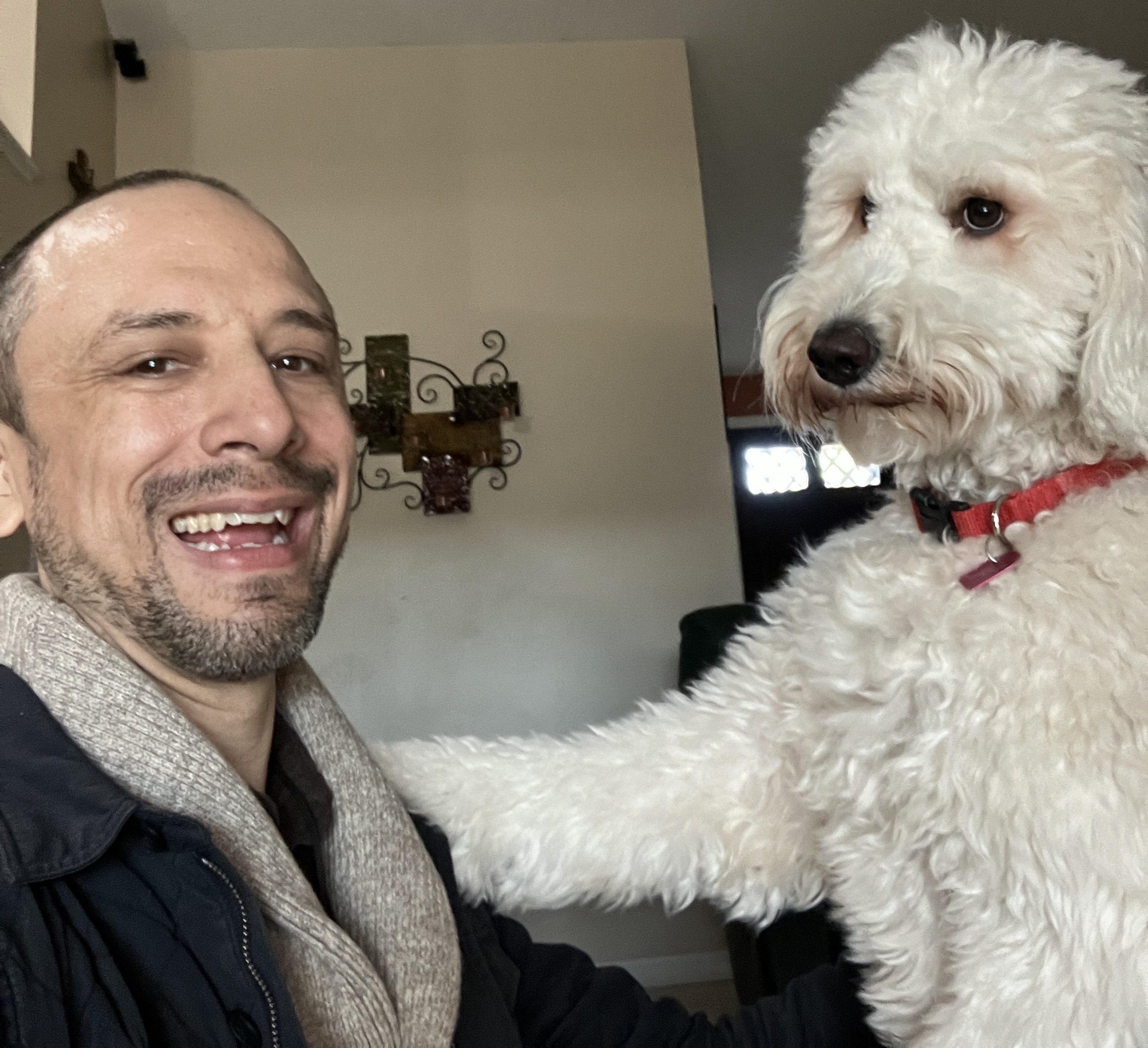
Initiatives of Creatives Rebuild New York gave me the opportunity to delve into these questions as an artist and an idea-smith.
It seems to me that truly generative spaces are envelopes of care.
______________________________________________________________________________________________________________________
Recognizing Creative Productivity
in
Envelopes of Care
backed by
Universal Basic Guarantees
by Marcos de Jesús “de la Guagua”
Preamble
Creative economy occurs in reciprocal Envelopes of Care:
- A burden is accepted, “I/we care about this.”
- Energy is spent, “I/we will care for this.”
- The expenditure creates a debt.
- Indebtedness is honored.
- Energy is spent to pay back debt and invested to pay forward.
- Life is created, extended and supported.
The cycle repeats.
This could describe any healthy relationship. Why should a healthy political-economy be any different? A creative economy produces, supports and extends life, not just profit/loss and production/consumption as disassociated from life.
Envelope of Care could describe the gestation of a pregnancy, the family supporting a child, the social network supporting a family across generations. Or it could describe Social Security and Medicare, or Universal Basic Income and community based guaranteed employment (Job Guarantee). These are Envelopes of Care (EOCs) backed by Universal Basic Guarantees (UBGs).
The most creative/constructive Envelopes of Care (EOCs) are:
-Universal
-Guaranteed
-Not profit dependent.
-Attendant to need.
The basic standards set by these universal guarantees form the baseline for other social expenditure. Competing ventures must meet or exceed these standards. This may be recognized in societies from small to large, across history, and even in nature.
If We guaranteed a basic level of full employment of culture-bearers and art-work, art economies could be economies of abundance, not scarcity.
Who are the "We" here? It is easiest if done by a currency issuing government on behalf of "We, the People".
Vision
- We the Co-Creators/Job Creators/World Makers enact/observe:
- Creative economy developing Envelopes of Care.
- A creative, caring economy backed by Universal Basic Guarantees.
- Multiple EOCs creating diversity of spaces to care for what communities care about.
World View Re-framing:
Recognizing Envelopes of Care all around us
-
Care-work creates our world.
- From forests to families care-work is the co-creation of our world.
-
Caring is:
- resource sharing, nurturing, burden-sharing, protecting, educating, etc.
Our World is Mostly Co-operative: The universe as an EOC.
EOCs contain and channel competitive energies constructively, like an electrical circuit. Competition is the junior partner to co-operation, only constructive when contained within limits.
In Natural systems—
-even prey/predator—co-evolve.
-Many species are allied.
-Competition is never win/lose, unless the ecosystem is collapsing.
Competition is a thread, not the fabric of society.
- Competition is either zero-sum or net negative on a system level.
- Competition contours our world when properly contained.
Systems Centering Competition are Destructive
-
Capitalism and Extreme Poverty (since ca. 1492)
- Black hole political economy, empire-driven.
Imagine All Work as Care Work
-
Are we caring for what we care about?
- Capitalism: Public entitlements caring for maximum shareholder profit.
- Democracy: Building a political economy of caring for what we care about: EOCs backed by UBGs.
Public Policy:
Multiple Universal Basic Guarantees (UBGs)
-
Better Together
- Universal: Solidarity politics, everyone qualifies and benefits.
- Basic: Creates basic standards which markets must meet or exceed.
- Guarantee: Creates effective demand in the economy (e.g., Medicare).
Jobs and Income
- Worker/Oppressed people movements demand both jobs and freedom.
Basic Income
-
Guaranteed Income is essential to universal freedom.
- Basic income of about $1000/mo as the basis for self-care, personal choices, privacy.
- BIG to honor self-care/other work currently not being paid, rather than to disconnect work from income.
Universal Basic Employment Guarantee
-
Our work transforms our world.
- A job guarantee that integrates lessons from CRNY-GIA and AEP, WPA, etc.
- Administration focused on support rather than gatekeeping.
- Administration supports team building, connection fostering, meaning making.
- Communities defining what work should be supported as a job.
- Creatives supported to reach communities their work could care for.
- Entrepreneurs similarly supported, but profit maximizing isn’t the only, or best model.
False Narrative: Tech will make human work unnecessary.
-
Reality: Tech can never make work unnecessary.
- Tech becomes part of the environment.
- Human work is what changes the environment.
False Narrative: Someday soon there will be no work to be done.
-
Reality: Cool story, but…
- There’s a ton of work to be done right now.
- Government can employ people directly to do the work that needs doing.
- Markets will follow government creation of effective demand. There will be opportunities for profit on the margins. That’s cool.
False Narrative: But first we have to find the money.
-
Reality: We are so money, and we don’t even know it.
- People make money. We co-create it as we co-create our world.
-
People make money in three ways:
- Social Currency A story about who owes what to whom (EOCs).
- Social Finance A ledger of credits and debits.
- Government Money A ledger of credits and debits created, adjusted and enforced by a governing authority. The authority can grow the ledger, delegate the use of its credits or destroy credits.
-What! But I thought money came from barter and then gold!-
-Cool story! But the historic evidence says money comes from law and government.-
False History: Markets > Money > Government/Law
Real History/Current reality: Law/Government > Money > Markets.
- Since ancient Mesopotamia. Ask a historian, not an “Orthodox Economist.”
- We always need agreements before we can invest, credit, debit, harvest, etc.
- Demand for a currency is backed by an authority taxing people in that currency.
- Then the government can spend by issuing currency.
- If the government currency issuing government spends more than it taxes, than currency users can create a market.
False Narrative: We the People are smaller than “the market.”
Reality: Capitalism is largely a set of government programs to maximize private profit, backed by geopolitical power and international law, an EOC for profit.
- We don’t rely on markets to create jobs—think of military spending.
- We can use our government for better things.
- Markets will follow. They can’t lead. The profit motive limits their agency. That’s why capitalists struggle to control governments.
False Narrative: Basic Income is the only solution we need.
-
Reality: Basic Income Guarantee is good, and way better than:
- Means-tested programs.
- People living on cash only.
- "Worthy-ness" tested, intrusive programs.
-
Strengths of Basic Income:
- Adding capacity for personal problem solving.
- Keeping government from controlling aspects of personal lives.
- Less intrusive than limited-use spending (e.g., SNAP, health savings accounts).
-
Risks of Basic Income:
- Basic income needs to be supported by guaranteed resources, or else it may lead to inflation.
- Working class power connects our work to it’s impact in the world. Basic income should be coupled with worker organizing/class consciousness, or else it could weaken the working class.
- Inflation and weakening the working class can lead to right wing backlash.
-
Sustainably resourcing Basic Income requires:
- An ongoing movement, EOCs around everyone’s worthiness for BI.
- Resources be created so recipients can buy what they want. (e.g., If people are spending on rent, build affordable housing.)
- If resources are not created to support spending (by the government, if the market won’t), any spending can lead to inflation, which nobody likes. Let’s not build the backlash, y’all.
How?
Theoretical Toolkit:
Modern Money Theory (MMT)
-
An alternative economic framework that shows what's possible and how to avoid inflation as formalized by subject experts since the 1990s (not my observations).
- The currency is a simple public monopoly. (Mosler)
- The dollar is a government program, a public utility that capitalism uses.
- Only a currency issuer creates net financial resources. Capitalists only redistribute government money. Currency issuing governments do not redistribute capitalist’s money. Capitalists cannot create net dollars.
- The U.S. Government cannot run out of dollars.
- We don’t need to "find the money." We need to find or create the resources needed to solve problems.
- Taxation creates effective demand for the dollar. Taxation does not fund federal spending.
- U.S. Government spending is always funded by creating new dollars (mostly reserve balances on government spreadsheets).
- Inflation can be avoided by matching resources to spending. Tax the rich to reduce their consumption of resources, not because we need their money.
- Prices ranges can be set by "buffer-stock" systems (Universal Basic Guarantees).
- The term "Modern" was originally used ironically (Wray). All this has been true for currency-issuing governments as far back as we have records of money (ca. 6,000 years).
- All this can be true for any country that can achieve sovereignty over its currency, energy, and food needs (Kaboub). People could travel for fun, not migrate out of desperation.


 Demo recordings can be a proof of concept.
 Just under the wire, at about 10pm on March 31st, I reached my creative goal for Jan-March 2023: 6 albums in 3 months! I am grateful. Listen for free at MarcosdelaGuagua.Bandcamp.com with no log in, or build our collection and support the work. Bandcamp is easy for artists and fun for listeners.